
 Google Play
A find does not begin when the object is in your hand. It begins the second the detector speaks. That is the moment when the things that give a find meaning — the place, the position, the map layer, the surroundings — can still be saved, or lost in ninety seconds of hurry.
The field habit that works is plain: observe and record first, act gently second, and stop at the first sign of a complex context. This is not about being slow. It is about repeatability — the thousandth decision should look exactly like the first.
This article covers only lawful, agreed work on ground where searching is permitted. It does not teach you to deepen a test pit, speed up recovery, or do anything at all with ordnance; those subjects are closed here on purpose.
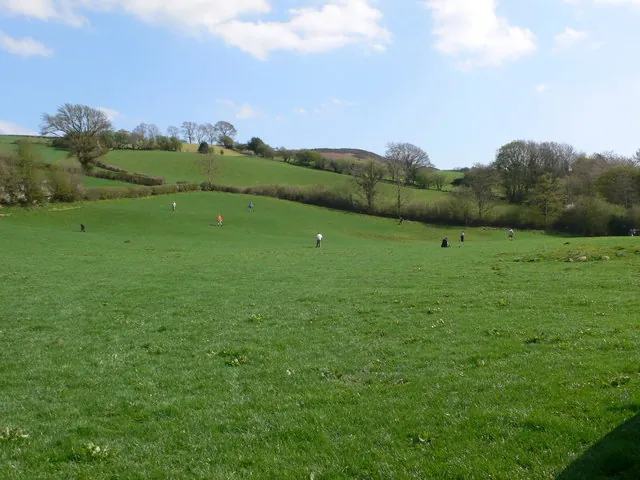
A map is not a permission. Neither a historical overlay, nor the absence of a prohibition sign, nor somebody else's find a week ago replaces the right of access, the landowner's consent and a heritage-status check. A signal least of all: a strong response does not make the ground permitted.
What to settle before the first signal
Context survives far better when the decision was made in advance. Before you travel, confirm the status of the parcel, agree access, prepare your log, and know beforehand what to do in a dangerous or significant situation. This is not paperwork; it is how you avoid improvising at the exact moment improvisation costs most.
| What must be clear | Why it matters |
|---|---|
| Status of the parcel and right of access | A historical sheet and an open field say nothing about whether searching and ground disturbance are allowed here |
| The rule for a significant find in your region | So you are not looking up the procedure while standing over a complex context |
| A safe plan in case of ordnance | Suspicious objects are not identified, dismantled or carried |
| A way to keep the log | Photo, time, map layer and note must be saved on the spot, not from memory in the evening |
| A way to restore the ground | Neat work and a closed turf plug are the basis of trust from the owner and the neighbours |
Safety and ethics and legal status remain the first reading before any trip; the Russian and Belarusian regimes are set out separately, for readers who search there, in the regional legal breakdown. This article does not soften their requirements — it turns them into a habit for the moment of the signal.
The first signal: pause instead of hurry
A signal is a reason to pay attention, not an order to act at once. Hurry produces two errors in one go: the disturbance grows larger than it needed to be, and the original picture disappears before anyone has looked at it. Twenty seconds spent on questions pay better than twenty seconds saved.
| Question to yourself | Why you need it |
|---|---|
| Where am I, and is the status of this ground clear? | A good signal is not an argument in favour of a doubtful place |
| What is around me: a single target, or signs of a concentration? | A complex situation calls for a stop, not for speed |
| Is there visible material, structure or unusual soil nearby? | It may be part of a context you must not destroy for the sake of one object |
| Are there any signs of danger? | Ordnance, unstable ground, buried services and steep relief rule out any experiments |
| What can I already record without disturbing anything further? | The general view, the time, a landmark and the map source are often worth more than the first minutes after recovery |
Sweep discipline and grid work belong to search tactics; here only what happens at the moment of the response matters.
Good pace in the field is not speed, it is repeatability: notice, assess, record, then either one careful, tightly bounded action in a clear and permitted situation — or a stop. There is no third option.
An ordinary find and a complex context
Not everything unusual calls for an archaeological procedure. But deciding for yourself how important something is usually ends with the information gone before anyone could assess it. So it is safer to work from the signs of the situation than from a list of valuable objects.
| Situation | What to do |
|---|---|
| A single ordinary find on lawful, agreed ground, with no signs of a complex context | Work gently and within a tight bound, without widening the disturbance; then restore the ground and fill in the record |
| An unclear structure, masonry, distinguishable layers, a marked concentration of objects or material | Stop and do not enlarge the disturbed area; record what is visible and move to the local procedure |
| Anything resembling a burial, human remains, an archaeological complex or a protected site | Stop immediately; clean nothing and separate nothing; contact the competent authorities under regional rules |
| Ordnance, a shell, a fuze, an unidentified military or suspicious object | Do not touch, move, test or transport it; withdraw and call the relevant services |
| A fragile object combining metal with glass, enamel, stone, textile, leather, wood or bone | Do not try to separate parts or clean it quickly; record the condition and move to safe storage or advice |
Signs of a cultural layer, an assemblage, a burial or a dangerous object are an order to stop disturbing the ground. Not to finish carefully, not to see what lies a little lower — to stop and follow the local procedure. Stopping keeps your options; carrying on usually does not.
Distinguishable layers and structures are no longer a hobby matter: why a complex context is never turned into a private excavation is set out in the piece on test pits and where the amateur stops. The Canadian Conservation Institute points out that archaeological material is especially vulnerable to an abrupt change of environment once it leaves the ground, and that the first few minutes decide whether the object remains fit to study.
The stop-and-report card
When any of the stop signs fires, what you need is not heroics but a short, clear order of actions. It is the same for a cultural layer, a burial and a suspicious object — only the addressee of the report changes.
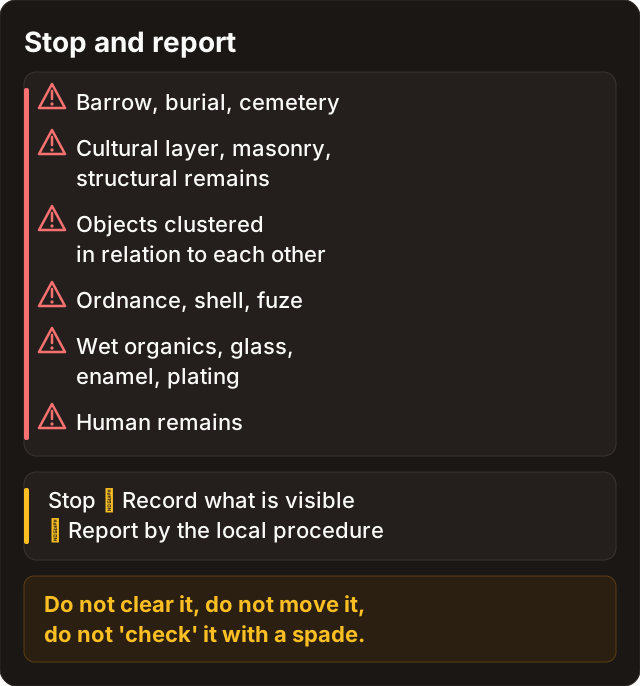
- Cease all disturbance and recover nothing further.
- Withdraw to a safe distance if there is even the faintest suspicion of ordnance.
- Clean nothing, separate nothing, move nothing, wash nothing.
- Record what is visible without touching the object: general view, landmark, time, map layer.
- Mark the point privately and do not publish the coordinates.
- Report through the local procedure and write down who was told, and when.
How to reach the competent authorities and how a significant find is handled are covered in what to do when you find something. Why a context record is worth anything at all is shown best by the recording practice of the British Portable Antiquities Scheme: an archaeological picture grows out of those find records that would otherwise not exist.
The minimum field record
A record must not be elaborate, or nobody will keep it. A small card, identical every time, is enough. Its value becomes obvious a month later, when you need to line the find up against the map, the conditions of the trip and its condition after storage.
| Field of the card | What to write | Why it helps |
|---|---|---|
| Date and time | When the entry was made | Lets you reconstruct the sequence of actions |
| Place | A private point and a clear landmark; sensitive coordinates are not published | Keeps the context without handing out locations |
| Map source | Series, year, sheet or overlay version | Explains where the hypothesis about the place came from |
| Detector response | VDI number, indicated depth, stability of the signal, ground balance | An observation of the machine, not an identification of the metal; later it helps check your settings against real targets |
| General view | A photo of the spot before any cleaning and without staged rearrangement | Preserves the original setting |
| Observation | What was visible: a single situation, structure, material nearby, signs of risk | Explains why you decided to carry on or to stop |
| Action | Ordinary record, stopped, reported, left in place per instruction | Makes the history of your actions transparent |
| Condition of the object | Visible material, fragility, corrosion, attached parts — without a hasty attribution | Points you to safe storage and the right Academy article |
A strong card describes an observation, not an attractive version of the story. Instead of an ancient coin by the manor, write: metal object, visible green corrosion; overlay — Shubert three-verst sheet; point marked privately; condition before cleaning photographed. The hypothesis goes on a separate line and is labelled as a hypothesis.
Which pieces of context are worth recording, and in what form, is covered in the find context catalogue. Why a VDI number stays an observation rather than a diagnosis is in discrimination and VDI.
What you must not do with a find in the field
The most expensive mistakes come not from a shortage of chemicals but from the wish to bring the moment of recognition forward. A field is no place for cleaning, for tests, or for a look under the crust.
| Action | Why not to do it |
|---|---|
| Cleaning the object with an abrasive, a knife, a hard brush or acid | The surface, the patina, traces of plating and technological information are lost irreversibly |
| Washing everything in water as a matter of course | For fragile, composite and salt-laden material an abrupt change of environment is dangerous |
| Breaking up a corrosion lump, pulling off attached parts, separating components | Inside there may be fragments, plating, organics or evidence of construction |
| Putting different wet and dirty objects together | Provenance data get mixed, and you add damage and cross-contamination risk |
| Publishing the exact point of a contentious or significant find | It harms the site and creates problems for recording and protection |
| Taking suspected ordnance home | Dangerous regardless of how the object looks or how old it is |
No cleaning and no active conservation treatment happen in the field. Not a quick wipe to read the date, not lifting the crust to see what it is, not a drop of anything from the rucksack. The field is for photographs, a written record and safe packing; everything else waits until home, after the material and condition are known.
A corroded surface does not always need to be freed. The Society for Historical Archaeology notes that on archaeological objects corrosion layers sometimes preserve evidence of technology, plating and associated organics, and that aggressive cleaning destroys it along with the dirt. The general logic of minimum intervention is set out in the principles of conservation and restoration.
After recovery: packing, the log and data privacy
After an ordinary lawful find there is one priority: do not let the object get worse before a considered decision at home or with a specialist. The object does not owe you cleanliness on the day it was found. It owes you looking as close as possible to how it looked when it came out.
| Next step | The safe goal |
|---|---|
| Take an as-found photograph | Get a starting point for attribution and future comparison |
| Keep the object tied to its record | Do not lose the place, the date, the neighbouring observations and the map source |
| Store it separately, clearly labelled | Do not mix contexts or damage fragile parts in transport |
| Start no treatment before the material and condition are known | Do not pick the wrong method from appearance alone |
| Check against the Academy articles | Move from general caution to a specific route: copper and bronze, silver, iron, special cases |
The first day after recovery decides more than all the chemistry that follows: what to do with wet, salty and fragile material straight away is in the first 24 hours, and watching the condition afterwards is in condition monitoring. Objects with organics, enamel, glass or an unstable structure should not become a kitchen-table experiment; they are covered in special cases.
How Discovera helps keep the context
Discovera gathers the story of a find into one card: the historical layer, the photos, the note, the route and a marker for what you did. The log then exists not for nostalgia but to audit your own decisions a month or a season later.
| Discovera tool | The right use |
|---|---|
| Historical overlay | Record which map source you used and what hypothesis it produced |
| Map pin | Keep the point private; do not publish significant or contentious pins |
| Find card | Upload the as-found photos, the condition description, the date and pre-cleaning observations |
| AI photo analysis | A hypothesis about the object's appearance, not a substitute for legal or conservation judgement |
| Linked log | Record what was done, what was not done, and why you decided to stop |
Neither the map, nor the AI, nor the log issues a permission to dig. Their job is to preserve the history of lawful and careful action. What the AI genuinely does and where its competence ends is in Discovera AI cases.
FAQ
Do I need to photograph every ordinary find?
If you want a log worth keeping, yes — one frame at minimum. An as-found photo, a private pin and a short note take less time than trying to remember in the evening where the object was and what it looked like.
There is a signal but nothing visible. What exactly should I record?
Only what is already known: the time, the place, the general view of the spot, the map layer and an observation about the situation. Object type and origin are not invented before there is ground for them; an empty check is a record too.
Can I give a coin a quick wipe to read the date?
Not in the field. A quick clean often turns out to be irreversible, especially on non-ferrous metal, plating and weakened surfaces. Photograph first, establish the material, then take the gentlest route from the restoration articles.
There are several objects nearby, but the site is definitely unprotected. Keep digging?
No. Widening the disturbance because the map shows no obvious prohibition is poor logic. A concentration can itself be a context, and the status of the ground and the local procedure need checking rather than guessing.
Why record empty spots?
Empty entries stop you walking the same ground twice and make your tactics testable: you can see where a map hypothesis failed. But they must not become a public map of points, and they do not make a trip lawful.
What if I have already cleaned the object in the field?
Do not compensate for the mistake with even more active treatment. Save a photo of the current condition, write down exactly what was done, and move to the article for that metal or to a specialist. An honest record beats a reconstruction from memory.
Where to go next
- Search tactics — how to run a sweep and a grid without turning the search into random digging.
- Safety and ethics — holes, ordnance, working in a group, weather and respect for the ground.
- What to do when you find something — the order of actions in a significant or contentious situation.
- Test pits and where the amateur stops — why a complex context never becomes a private excavation.
- Find context catalogue — which data about a find are worth recording, and how.
- The first 24 hours after recovery — what to do with a find before any cleaning.
Sources
- Canadian Conservation Institute — caring for archaeological collections
- Canadian Conservation Institute — care of metals
- Society for Historical Archaeology — conservation treatments
- British Museum — Treasure and the Portable Antiquities Scheme
- Portable Antiquities Scheme — the finds database and recording practice