
 Google Play
Ruining a find is far easier than finding one. That is not a figure of speech: half an hour with an abrasive will write off a coin that spent two hundred years in the ground and came out perfectly readable.
So restoration has a step zero that beginners skip — deciding not to clean. This article is about making that decision well, and, when cleaning really is needed, about which materials to use, in what order and with what checks before you start. Protocols for specific metals have their own guides: copper and bronze, silver, iron and electrolysis.
If the object has only just come out of the ground, there is one more step before all this — the first 24 hours after a find: how to get both the object and what you know about it to the table without losing either on the way.
Reversibility decides everything
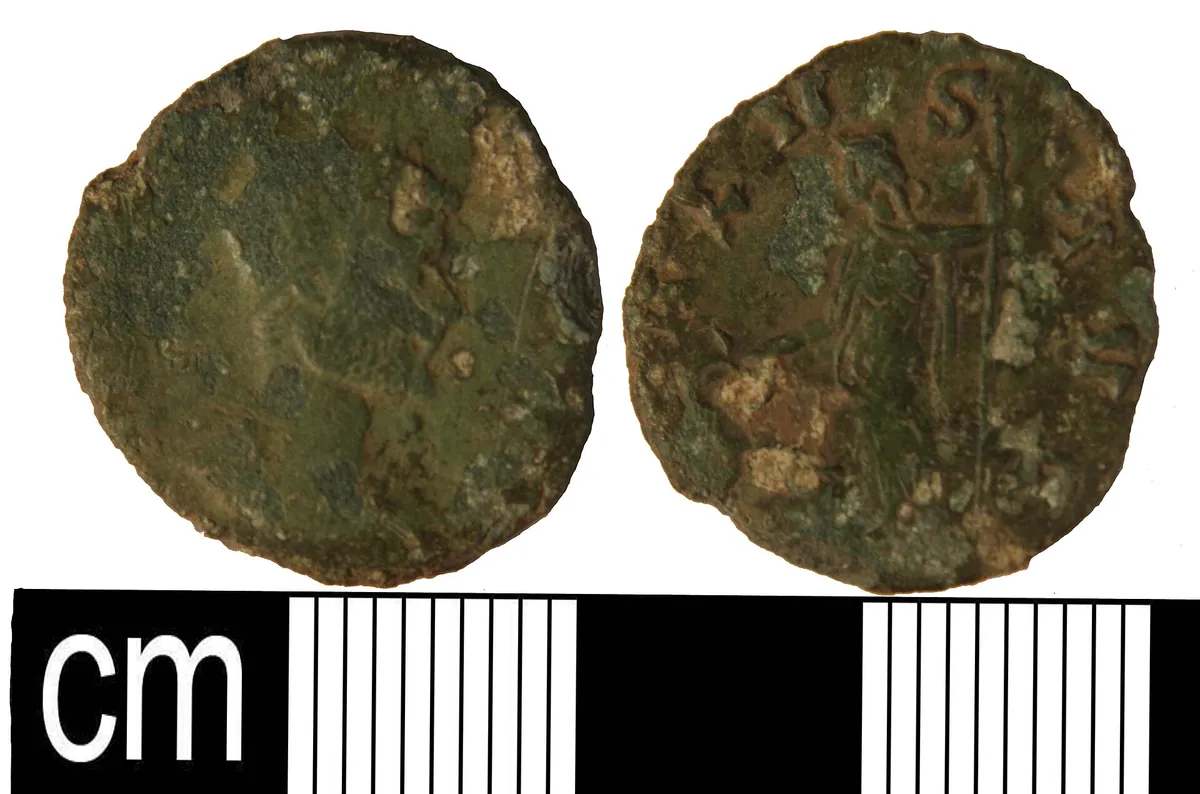
The test is simple: can you change your mind? Soak something in soap and think better of it, and nothing has happened. Take sandpaper to it and think better of it, and the relief is gone for good.
Hence the golden rule: if you are unsure, don't clean. A dirty but readable object beats a shiny pitted one every time. Dirt comes off later. Pits never do.
When not to start at all
- Rarities, and anything you plan to sell, until you have practice on things that don't matter.
- Even, stable patina — especially on silver. That patina *is* the value.
- Thin or cracked pieces: chemistry will finish what the soil started.
- Anything with an inset — stones, enamel, glass. Those get their own rules in special cases.
When cleaning genuinely helps
There are three honest reasons to pick up a find.
The first is a study piece whose legend is unreadable and you need to know what it even is. The second is active bronze disease, where doing nothing is itself destructive — the object is literally crumbling. The third is iron that will otherwise fall apart, and that one is only worth starting if you are ready to consolidate immediately: without a barrier it all comes back within weeks.
Six do-no-harm rules
- Minimum intervention. Soap and mechanics come before you remember chemistry exists.
- Reversibility. Do not burn away relief with an abrasive to save an afternoon.
- One metal, one bath. Copper and silver in the same tank will do galvanic damage to each other.
- Document. A "before" photo in Discovera is worth ten recollections of "I think there was something like a crest there".
- Test the hypothesis on pixels. If you want to see how it might turn out, an AI preview only risks a file.
- Finish with protection. Dry it, seal it. Skip that and the cleaning undoes itself.
Restoration begins with the decision to do nothing
Minimum intervention is not passivity. It is a deliberate decision to preserve both the object and the information around it until the material, the condition and the purpose of the work are clear. If the object has only just been lifted, record its as-found state first. If the material is mixed, the surface is unstable and the storage conditions are unknown, the right first move may well be observation and a second opinion, not treatment.
Every intervention needs a purpose you can write down in one sentence: stop the activity you can see, keep the legend readable without removing the patina, get the object ready for safe storage. "Make it prettier" is not enough, because it gives you no criterion for stopping.
Deciding to do nothing for now is itself an action: it has a date, a recorded condition and a scheduled next inspection. How that is kept is in preservation and monitoring.
Patina or disease
A good share of ruined coins are somebody removing "the green stuff" that was in fact a protective layer. Dense, even patina has sealed itself and keeps the metal out of contact; loose light-green powder is the opposite — it eats the metal.
If you cannot reliably tell them apart, that is normal, but it means stop and take the softest route. What bronze disease looks like and how it is stopped is in the copper and bronze guide.
Decision tree: what comes first
Before you choose a method, look at the object and be honest about what you actually see. Observation sets the first route, not what metal the thing is supposed to be.
| What you see | First route |
|---|---|
| The material is unclear | Photographs, a condition card, identification or a second opinion; no reagents |
| Wet organics, glass, enamel, plating, a composite object | Stop active treatment, get a specialist assessment |
| A maker's mark, inscription, painted decoration, gilding or silver plating | Photograph under raking light; do not open the surface up mechanically |
| Loose, spreading or recurring corrosion | Isolate it, keep a conservation log, assess salts and storage conditions |
| An ordinary stable object of known material | The guide for that metal — and the checklist below before you start, so you stay inside the limits of the method |
Checklist before you begin: five minutes that save the object
These five minutes are spent once, before the object goes anywhere near water, a brush or a solution. Until every line is closed, cleaning does not begin.
| Check | Done? |
|---|---|
| Reference photos with a scale and an ID exist | ☐ |
| Date, private location reference and the source of the find hypothesis are recorded | ☐ |
| The material is stated with a confidence level, not from colour alone — or the softest route is deliberately chosen | ☐ |
| Stop signals checked: organics, glass, plating or gilding, hallmark, active corrosion, hazardous context | ☐ |
| The piece is definitely not a rarity; if you suspect it is, you don't clean | ☐ |
| The purpose of the intervention is clear, and so is the criterion for stopping | ☐ |
| You know how this ends: drying and consolidation | ☐ |
| The object is separated from the others and has its own record card | ☐ |
| Gloves, eye protection, ventilation and distilled water to hand; the collection is out of the work area | ☐ |
A stop signal is not a reason to look for a gentler method. It is a reason to stop, leave the object as it is and show it to a conservator: damp organics, glass, enamel, thin plating and loose active corrosion do not forgive a "trial" clean.
Water is not a neutral step either: it mobilises salts and starts processes you will then have to stop. What actually happens on contact with water is in water, salts and hydrolysis.
The kit that's hard to do damage with
This is where you start, and where about eighty percent of field finds also finish.
| Product | What it does |
|---|---|
| 72% laundry soap | Softens soil and loose oxides, leaves dense patina alone |
| Distilled water | Rinses and solutions. Tap water brings its own salts |
| Soft brushes | Mechanics without scratches |
| Loupe and good light | Let you see what you're doing before you've done it |
| Gloves, ventilation | Boring, right up until the day it isn't |
Distilled water is not pedantry here. The whole point of rinsing is to get salts out of the pores; rinse with water that contains salts and you are simply swapping one set for another.
Chemistry does not identify the material
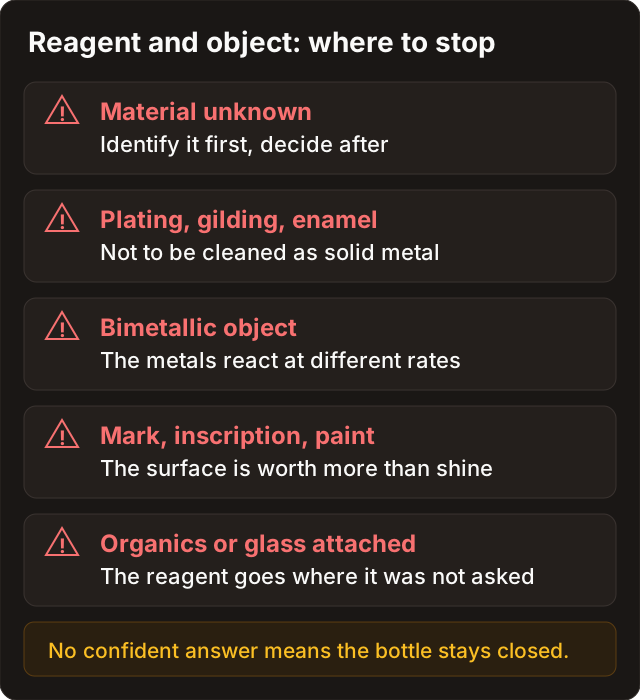
A chemical test on the object itself is not a safe way to learn what it is made of. The reagent changes the surface, and without a comparison sample and proper analysis the result reads badly: a stain appeared — and what exactly did it prove? So what follows explains what these materials are for and what they risk, rather than telling you to put a drop on it and see.
| Situation | Limit |
|---|---|
| Material unknown | Reagents, acids, alkalis, solvents and electrolysis are not used as a test |
| Plating, gilding, silvering, niello, enamel, glass | The generic metal protocol does not apply |
| Bimetallic pieces, or metal with organics | Any liquid or chemical treatment has to be compatible with every material at once |
| Inscription, hallmark, painted decoration, lacquer | The surface is not opened up for legibility before photographs and assessment |
| Old coating of unknown composition | Nothing new goes on top without a record and a compatibility check |
If the material is not identified, the route leads back to the decision tree above rather than to a reagent. A stop signal is a reason to move to special cases, not to the next method.
The more interesting reagents
- Citric acid (~10%) — silver oxides. Works fast, and goes matte just as fast.
- Sodium sesquicarbonate (~5%) — against bronze disease. Baking soda is weaker and often can't cope with active spots.
- Thiourea — sulfide blackening on silver. Follow the instructions, and not on your first coin.
- Washing soda — the electrolyte for iron electrolysis.
- Ammonia and strong acids — high risk, and impossible to dose by eye. Copper comes out of them pink and soft.
Concentrations, times and limits for each metal are in the dedicated guides. The principle is the same everywhere: use the lowest concentration that solves the problem, not the highest one that solves it fastest.
Mechanical tools
A fiberglass brush only works wet and without pressure: dry, it leaves a matte web that shows up at every angle afterwards. Scalpels and needles are for spot work on thick crust, not for running over silver "to brighten it". Ultrasonic baths are acceptable with one metal at a time, distilled water and a timer. For recesses, nothing beats toothpicks and wooden sticks — wood is softer than any metal you'll be working on, which makes it safe by definition.
The order that saves finds
- "Before" photo.
- Soap and mechanics.
- Only if needed — a narrow reagent for that specific metal.
- Generous distilled rinse.
- Drying and consolidation.
Note that chemistry is third, not first. That isn't caution for its own sake: most finds never get that far.
Fumes, consumables and waste
A reagent damages more than what you put in it. An open container on the bench works by area: the fumes reach the coins on the shelf opposite quite happily, and you will then spend a long time wondering why a piece you never touched went dark. Close your containers and move the collection out of the work area.
Anything that has been in contact with the object or with the chemistry counts as contaminated: solutions, cloths, brushes, gloves, filters. Solutions carrying salts, metals or reagents do not go down the drain and do not sit in unlabelled jars — in a month nobody remembers what is in that one.
- Label the container as you fill it: contents, concentration, date.
- Collect spent solutions separately and dispose of them under your local hazardous waste rules.
- Keep only the volume of reagents you genuinely need: a just-in-case stock is a storage risk and nothing else.
- Rinse water from a desalination soak does not go back into use. The salts it pulled out are still in it.
Working with reagents means gloves, eye protection and ventilation, not one quick minute with the window shut. Keep containers closed and labelled, and keep the work area away from the collection and away from food.
Eight expensive mistakes
All of them happen constantly, and all of them are irreversible.
- Polishing compound on silver. Fast, shiny, and the collector value is gone.
- Dry felt and coarse abrasives. A web of scratches that shows under any light.
- Open chemistry next to the collection. The fumes will spoil coins you never took off the shelf.
- Several metals in one bath. Galvanic corrosion doesn't ask permission.
- Leaving it too long in acid. Soft pink metal where a coin used to be.
- A scalpel on silver. Silver is soft; the relief goes with one wrong movement.
- Dry fiberglass. It only works in water or a soapy bath.
- Wax over active disease. That isn't treatment, that's a lid.
What you're risking
| Product | Typical risk |
|---|---|
| Laundry soap | Essentially none. This is the baseline |
| Citric acid | Silver goes matte if left too long |
| Sesquicarbonate | Needs the copper spots watched |
| Electrolysis | Reversed polarity, over-etched iron |
| Abrasives | Scratches, permanently |
After cleaning
There is no general "rinse and dry" rule. Water, salts, glass, damp organics, porous materials and composite objects each call for a different decision. If you cannot explain why this object needs contact with water and how the result will be controlled, contact with water does not begin.
After that, the order is:
- A distilled rinse — only if water contact was part of the plan and the object tolerates it.
- A full dry, all the way through rather than by eye: moisture under a barrier works against you.
- A thin barrier — and only onto a dry, stable surface.
- Date, product, soak time and purpose into the conservation log, the same day. In a year that note will be the only source of truth.
- A look at it again a few weeks later, and from there follow the monitoring after conservation schedule rather than your memory.
Worth remembering
- If you're unsure, don't clean. A dirty readable coin always beats a shiny dead one.
- Patina and disease are different things, and confusing them is expensive.
- Bright powder and growing spots mean stop, and switch to the soft copper protocol.
- Salts and pH matter more than the strength of the acid.
- After any active phase: rinse, dry, consolidate.
External orientation
The general museum reference for handling metal is Canadian Conservation Institute — Care of Metals: storage conditions, stabilisation, minimum intervention and the logic of the minimum sufficient concentration. Forum recipes are worth checking against it. Hobby cleaning does not replace museum practice and does not pretend to — and a step you cannot explain is a step to skip.
FAQ
How should any cleaning start?
With a photograph, not a reagent. Then laundry soap, a soft brush and distilled water. Acid "because it's faster" is the worst available first move.
Copper / silver / iron?
Each metal has its own logic; there is no universal recipe:
- Copper and bronze — protect the patina, treat chlorides with sesquicarbonate.
- Silver — citric acid or thiourea, and leave rarities alone.
- Iron — electrolysis step by step, salt rinses and consolidation immediately after.
Is preservation always required?
Yes. The moment you lift the crust, the metal is open to air and moisture again — you have essentially returned it to the day it came out of the ground. Preservation closes that; the checklist above reminds you of it before you even start.
Can I preview cleaning?
You can, and it is the cheapest way to change your mind: Discovera AI cases work on a photograph and leave the original untouched.
Special cases (bi-metal, stones)?
With stones and enamel you don't use chemistry at all — the solution loosens the setting and the stone stays in the bath. Bi-metal pieces are cleaned only with what suits both metals at once, or not at all. Details in special cases.