
 Google Play
A good outing is one after which they'll let you back. That's a surprisingly precise test: if you left intact turf, unharmed livestock and no adventures with ordnance, it went right.
The legal side is covered in legal status, and the usual beginner failures in top 10 mistakes. This is about what happens in the field itself.
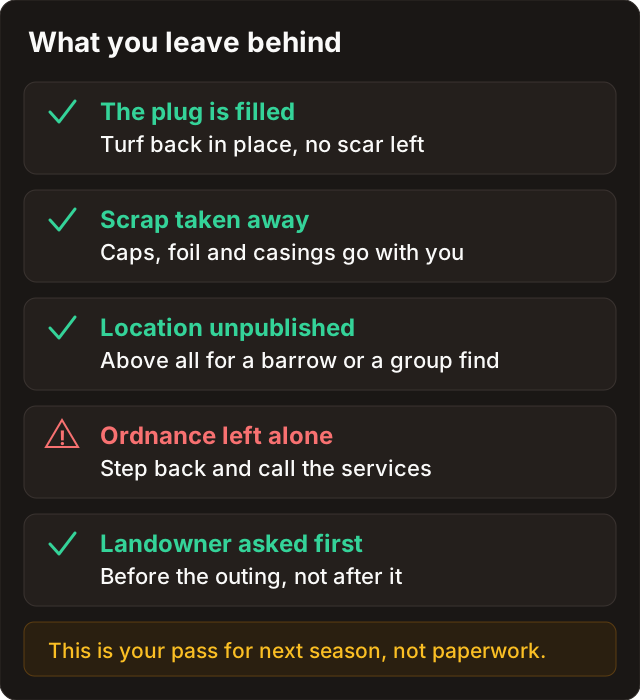
The code on the ground
It's short, and almost all of it comes down to leaving no trace.
- Fill your holes. Rule one, not up for discussion. An open hole is a broken leg on an animal and a conversation after which nobody gets onto that field again.
- Ask permission. A fence, a crop, a private yard — not your spot until somebody says otherwise.
- Take your rubbish out. The caps and foil you dug shouldn't be left lying beside the hole.
- Don't publish coordinates of valuable finds. Not in a chat, not in comments, not "just to friends".
Unexploded ordnance
No jokes in this section. The wars left plenty in the ground, and it still turns up regularly.
- Don't touch it, take it apart, heat it or knock it. Rusted through does not mean safe — often the opposite.
- Mark the spot and move away.
- Call emergency services or the police under your local protocol.
- Don't put the "trophy" in your boot and don't film yourself dismantling it.
Fuzes that have sat in soil for eighty years behave unpredictably. This is the one topic in the hobby where the cost of a mistake isn't a lost find.
Groups and rallies
Agree the area and how you'll stay in contact before you set out, not once you're there.
Show beginners a model hole and how to use a pinpointer before they dig their first one — unlearning is harder. And finds with a doubtful status follow the procedure, not the principle of who spotted it first.
Weather, terrain, machinery
Tell somebody which area you're going to. It costs one message and may one day be worth considerably more.
Steep banks, quarries and bogs are their own category of risk, and not somewhere to go alone. And keep your headphones from sealing you off completely: the tractor in the field and the car on the verge need to be audible.
Ethics versus extraction
The line between detecting and looting runs through one thing: whether you preserve the context or destroy it.
If an object looks like archaeology from a cultural layer, that's a stop and a legal procedure, not a pocket. The app and the diary are on your side here — they record that you did it properly.
Before you set out
- Land agreed, status clear.
- Spade and pinpointer ready for a clean hole.
- A plan agreed for what to do if you find ordnance.
- Somebody at home knows the area and when you're back.
- The diary is running, and precise pins for valuable finds stay private.
FAQ
Why can't I leave holes open?
Because filling them is your pass for next season. Replaced turf is the only reason a landowner will agree to see you again. See beginner mistakes.
Private land, "if nobody's around"?
No. You need consent, and the owner's absence is not consent.
What about monuments and protected sites?
Stop. Neither the map nor a good signal overrides the status. Overview: legal status, regions PL/DE/UK.
Should I publish exact find coordinates?
Precise pins for valuable or contested complexes, no. The diary exists for you and for recording, not for handing out spots.
I found something contested — now what?
Follow the find procedure: stop, record, photograph, notify under your regional rules.
Can I bring children?
Yes, if the land is legal. It's also the best way to pass on the habit of filling holes and not touching unfamiliar metal — children copy what they see.