
 Google Play
Every review will tell you its machine is the best one. The trouble is that "best" doesn't depend on the machine but on where you walk: a coin field, a salt beach and a trashed homestead make different demands, and hardware that excels at one is mediocre at another.
One more thing: the difference between a good outing and a bad one is more often decided not by the control box but by whether you brought a pinpointer, and whether your spade suits the ground. A flagship without a pinpointer loses to a budget machine with one — not on depth, but on finds per day.
So don't start with models. Start with two honest answers: where will you actually go, and how much are you prepared to spend. Below: machine tiers, what the technologies mean in the field, specific models, the kit, and the buying order.
Machines by tier
| Tier | What you're paying for | Where to look |
|---|---|---|
| Entry | Simplicity and weather sealing | Simplex Ultra, X-Terra Pro |
| Mid | Multifrequency without the premium | Nokta Legend |
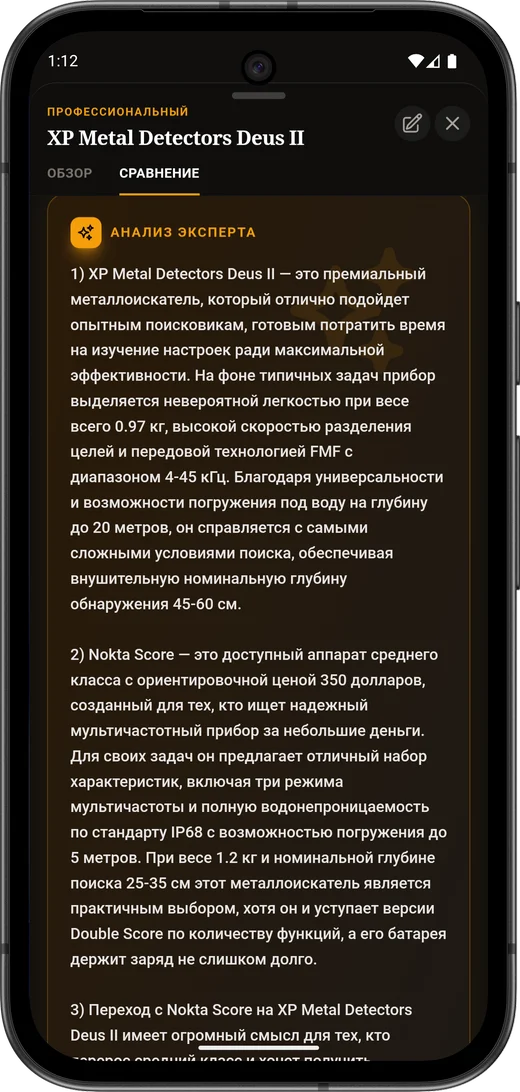
| Flagship | Separation speed, salt, heavy trash | Manticore, Deus II |
Buying "to grow into" on credit before you have 10–15 outings behind you is a bad idea for a simple reason: you don't know your scenario yet, so you're buying for somebody else's.
Multi-IQ, FMF, SMF: what they mean in the field
| Technology | Who | What you'll notice |
|---|---|---|
| Multi-IQ / Multi-IQ+ | Minelab (Equinox, Manticore) | Stable ID across soils, confident on the beach |
| FMF | XP Deus II | Very fast recovery, comfortable in iron |
| SMF | Nokta Legend | Multifrequency for less money, flexible modes |
The acronyms sound impressive, but for the user the difference comes down to three things: how quickly the machine separates adjacent targets, how calmly it handles salt and mineralisation, and whether it's pleasant to operate. The rest is marketing. Setting it up is covered in detector settings.
Three flagships for coin fields
Minelab Manticore
Multi-IQ+ with a faster recovery speed. Its defining feature is ID Map, a two-dimensional target signature instead of a single VDI number: ferrous and non-ferrous appear as different regions rather than adjacent digits. On heavy mineralisation the All Terrain High Conductors program gets a lot of praise.
XP Deus II
Fully wireless, running FMF. Its strength is ground packed with iron: where other machines choke, the Deus keeps separating targets. Deep HC is the common recommendation for deep coins, and firmware 2.0 and later noticeably improved its behaviour in iron.
Nokta Legend / Legend 2
SMF, and the best price-to-capability ratio in the line-up. Ferrocheck helps reject caps and iron, and the 2025 updates improved ergonomics and sensitivity to small targets.
The beach: why Manticore usually wins
Salt water and wet sand break stability harder than any other ground. Field reports consistently put Manticore ahead on salt, particularly in the wet zone.
The Deus remains an excellent choice on dry sand and in trash, but if you plan to work wet sand and surf, Multi-IQ+ wins more often.
A budget way in
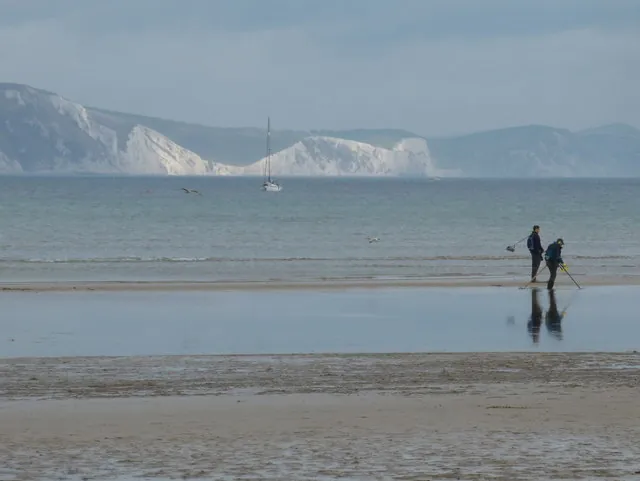
The Nokta Simplex Ultra offers weather sealing, modern modes and a sane entry point. The Minelab X-Terra Pro is an easy way into the Minelab ecosystem without the flagship price.
Either will carry you through a full first season. Buying a near-flagship on credit before you know whether you go out monthly or every weekend is the most common way to waste money in this hobby.
The kit: what's mandatory besides the box
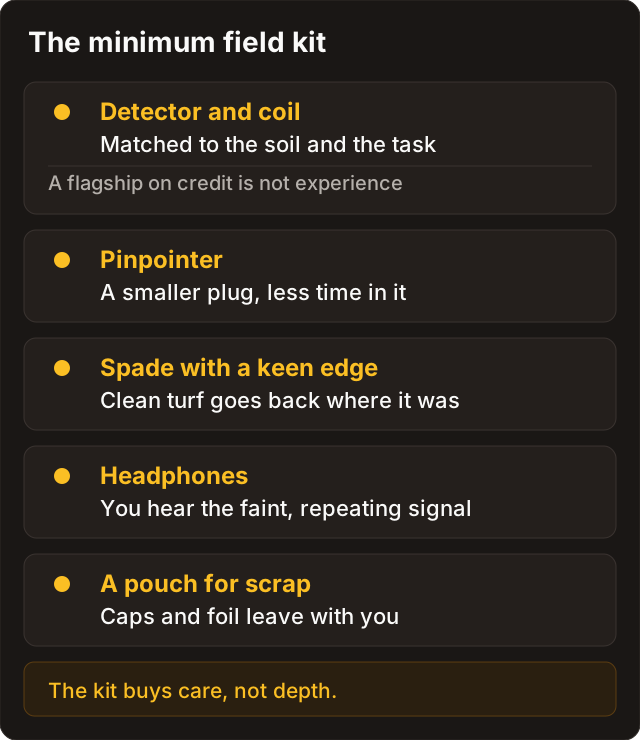
- A pinpointer. More important than a second coil early on, by a wide margin.
- A spade or T-handle suited to your ground. Woodland and beach are different tools.
- Headphones. Less ambient noise, better tone, and a faster grip on the sound-to-target link.
- Control box protection and a coil cover, plus spare power.
- A finds pouch, gloves, water, a phone that works. The boring part of the list that keeps an outing an outing rather than an adventure. Adventures in this hobby happen exclusively to people who skipped it.
An extra two hundred dollars in a coil almost never returns as much as the same money in a pinpointer plus a decent spade:
- Smaller holes, with the turf and the find both in better shape.
- Faster recovery, which means more ground covered per outing.
- You learn to listen to the machine instead of excavating a square around where you think it is.
Coils can wait
Changing a coil makes sense once you understand your scenario: a sniper coil among roots in woodland, a wide one on open field. Before that the stock coil will serve you better, if only because you'll have time to get used to it.
What's more useful in that period isn't buying more hardware but keeping statistics: which mode and which coil actually produced finds.
When to upgrade
Note the machine, coil and mode next to your finds. After a season it becomes clear what works on your ground rather than in a review video. That is also the answer to when to upgrade: when the diary shows what you're actually running into — iron, salt or depth. Outing statistics in the app will eventually show your real scenario, and that's what the hardware should be bought for.
Packing before an outing
- Machine assembled and tested at home, not on a verge in the rain.
- Pinpointer and spade didn't stay in the hallway. This happens more often than anyone admits.
- Offline map and polygon downloaded in advance.
- Power bank and a spare cable.
- First aid kit, and an agreed rule about unexploded ordnance — see the safety guide.
Five common misses
- Flagship present, pinpointer absent.
- One spade for every kind of ground.
- No box protection — until the first downpour.
- Headphones "later".
- No record of which mode produced what.
The buying order
- Decide the scenario: field, beach or trash.
- Work up the budget: Simplex Ultra or X-Terra Pro → Legend → Deus II or Manticore.
- Pinpointer and spade in the first purchase, not "later".
- Check that service and firmware are available in your region.
- Set aside time to learn the settings, and don't chase VDI myths: the ground and the sound will do more than any firmware.
- Decide where you'll log outing statistics.
FAQ
Which detector should a beginner buy?
The one that covers your scenario and leaves room in the budget for a pinpointer. A flagship on credit "to grow into" — no. A Simplex Ultra or an X-Terra Pro is enough to start; the next step is a Legend.
Pinpointer or second coil first?
Pinpointer, no contest. You change a coil once the scenario is clear and you have signal statistics.
Are headphones required?
Yes. Less noise, more audible half-tones, and a much faster habit of reading a target by ear rather than by number alone. See VDI.
When to upgrade the machine?
After 10–15 logged outings. By then it's visible whether you're limited by iron, by salt or by depth — and the upgrade becomes a decision rather than an advert.
Where to compare specs?
In the app catalogue and in the tables above. Log the mode and coil next to your finds and you build your own comparison base.
Coil cover and control-box protection?
Yes, especially in woodland and rain. A cover costs a small fraction of a replacement coil. See also safety.
Which metal detector is best for the beach?
For wet sand and surf, field reports more often favour the Manticore on Multi-IQ+: it handles salt more calmly. On dry sand and in trash the Deus II remains an excellent choice.