 Google Play
This is general reference information, not legal advice and not a guide to where you may dig. Rules change; check the official texts and local permits before you travel. The four checks before you go, the prohibitions that apply almost everywhere, the Russian and Belarusian rules and what to do with a find are in metal detecting and the law in Russia and Belarus; the ethical side is in the safety guide.
The main thing to grasp up front: national regimes differ radically. British and Polish practice are close to opposite approaches, and you cannot transfer one to the other based on a video you watched.
The shared framework
Many European regimes rest on the ideas in the Council of Europe's Valletta Convention: archaeological heritage is a public interest, and interference with it is regulated by the state.
After that the differences begin, and they are substantial.
United Kingdom
The England and Wales model is often held up as responsible amateur detecting. It works like this:
- The landowner's consent is the base condition; nothing starts without it.
- The Treasure Act 1996 and related rules: certain categories of find must be reported to the coroner within a set period.
- The Portable Antiquities Scheme — a voluntary and actively encouraged scheme for recording everything that falls outside the Treasure Act. It is what turned British detectorists into a source of archaeological data.
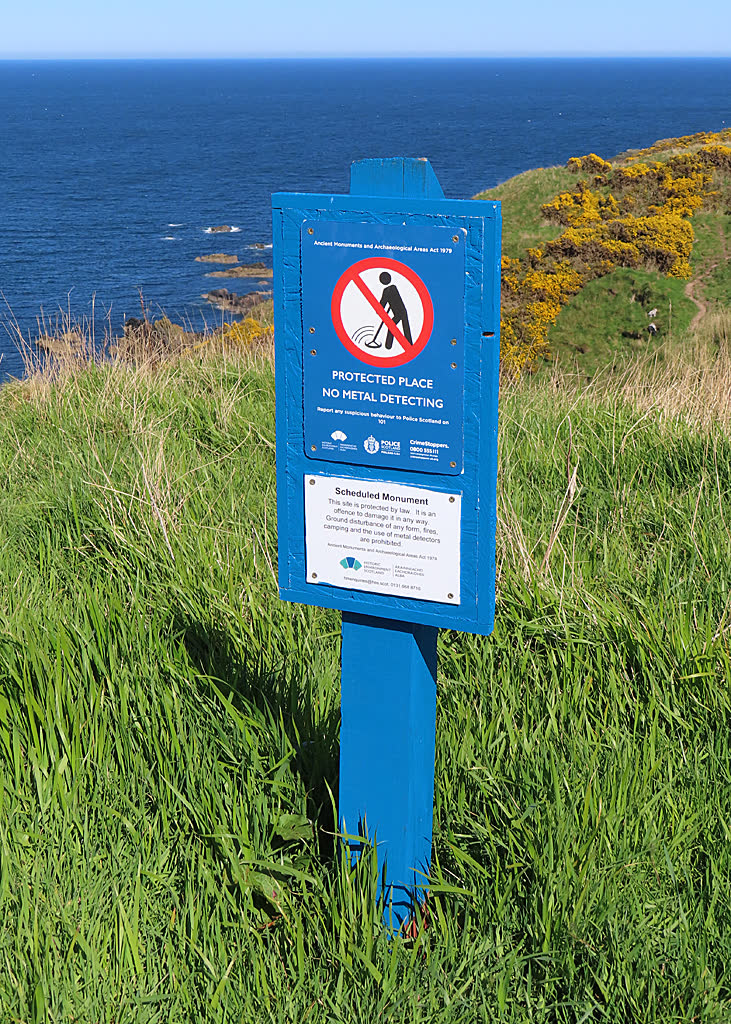
- Scheduled monuments and protected sites are outside amateur searching, with no exceptions.
Scotland and Northern Ireland have their own nuances and need checking separately. For maps, Ordnance Survey sheets are useful — how to read them is in how to read an old map.
Poland
The Polish regime has historically been strict about searching for zabytki with a detector:
- Searching for hidden or abandoned movable monuments by electronic means normally requires authorisation from the voivodeship conservator (WKZ) under the ministry's current procedure.
- Archaeological finds are generally treated as state property, and unauthorised dealing carries risk.
- The procedures, including digital applications, changed through the 2020s. Forum advice from 2018 is almost certainly out of date — check the current material on gov.pl, the MKIDN site and with your local WKZ.
- Private land without consent, and protected zones, are separate stop factors on top of all of the above.
The practical conclusion for a visitor is simple: permission or notification under the current scheme first, field second. Field videos from the internet are not a reference point.
Germany
There is no single federal rule for amateur detecting in Germany, and that is the defining feature:
- Rules depend on the specific Bundesland and on the protection-zone regime (Bodendenkmal, Schutzzonen).
- You will almost always need the landowner's consent and an understanding of local archaeological-service practice.
- Searching on known monuments and in restricted zones is a straightforward red flag, carrying fines and criminal risk under local law.
- A beach or a field that "looks like nobody's" permits nothing automatically: check with the Gemeinde or the Denkmalschutzbehörde.
Messtischblatt sheets are excellent for understanding landscape history, but they confer no right to search whatsoever.
France
Searching for archaeological objects with a metal detector without authorisation is prohibited, and amateur detecting is tightly constrained by heritage legislation.
Worth stating separately: don't take your cues from other people's field videos. That somebody filmed it and had no trouble is not a legal argument. Check permits and zones in official sources; mapping services such as Geoportail are useful for context but are not law.
How to use this
| Step | Action |
|---|---|
| 1 | Identify the country and region of the parcel — not "Europe in general" |
| 2 | Check the official source and agree it with the landowner |
| 3 | Rule out monuments, burials, protected areas, restricted sites |
| 4 | Keep a diary without public coordinates for valuable finds |
| 5 | For a contested find, follow what to do with a find |
What the app does and doesn't do
The app helps you plan and document: overlays, offline maps, a finds journal, photo analysis. It does not replace a permit and does not show you where to dig illegally.
Where the law requires recording, a diary and in-situ photographs are exactly the skill expected of you. See also metal detecting from scratch.
Official sources
- Portable Antiquities Scheme
- Treasure Act 1996
- Council of Europe — Valletta Convention
- Poland — government portal gov.pl
Before each season, re-check when amendments come into force, especially for Poland, where procedures have changed most actively.