
 Google Play
“Rinse it and the salts will come out” sounds reasonable — and it is almost always too crude. Water does dissolve and carry salts. It also moves contamination around inside pores, changes the moisture regime, undermines coatings and breaks whatever was held together by moisture alone.
On one object the main risk is active metal corrosion. On another, salt crystallisation in the pores. On a third, a chemically weakened surface layer of glass. On a fourth, the shrinkage of wet organics as they dry. Different mechanisms — and a single rinse does not treat them all.
Water is not a neutral universal tool. Desalination is not a synonym for soaking: it is a controlled conservation treatment.
What follows is about those mechanisms and about where to stop in time. There are no home recipes, concentrations or bath schedules here: for significant, archaeological, composite or simply unidentified objects those decisions come after diagnosing material, condition and context, with documentation and monitoring of the result. The general framing is in restoration principles; the first moves after lifting are in the first 24 hours.
Five processes lumped into the word “hydrolysis”
Among hobbyists “hydrolysis” has drifted into meaning any water-related deterioration. In practice it pays to name the process precisely, because the name drives the action. Treating salts like corrosion, glass like metal, or organic shrinkage like “oxidation” means missing at the very first step.
| Process | What happens, simplified | Where you meet it | What matters to you |
|---|---|---|---|
| Crystallisation of soluble salts | Salt solutions travel with moisture; when conditions change the salts crystallise in pores and on the surface and generate pressure | Porous ceramics, stone, brick, archaeological metals, mixed objects | A visible white bloom is not the only sign; aggressive washing and fast drying change the picture, not the cause |
| Metal corrosion | The metal reacts with its environment; moisture, oxygen, salts and alloy composition set the rate and the character | Iron, copper alloys, lead, zinc, tin and others | The corrosion layer can carry information and can be the only thing holding the shape of the object |
| Alkali leaching and dissolution of the glass network | Water leaches alkali components out of the glass; the chemically altered surface layers weaken, flake and erode | Archaeological and historic glass | Iridescence and cloudiness are no reason to “restore clarity”; the surface may be extremely fragile |
| Hydrolytic breakdown of organics and polymers | Water takes part in breaking chemical bonds in certain organic materials, especially under poor conditions | Paper, leather, textile, wood, adhesives, coatings, composites | The brittleness can be internal and only shows up during cleaning, bending or drying |
| Mechanical shrinkage on drying | A waterlogged structure loses its supporting water and changes volume | Waterlogged wood, leather, textile, bone, composites | Not hydrolysis at all, but the highest risk of losing the shape; it needs a professional stabilisation strategy |
Only one of those five is genuinely hydrolytic. The other four are crystallisation physics, electrochemistry, leaching and the mechanics of shrinkage. In conversations about finds the word “hydrolysis” usually gets in the way.
Historic Jamestowne describes two competing water processes for archaeological glass: leaching, which washes alkali components out of the structure, and dissolution of the glass network itself. The result is layered surfaces, flaking, pitting and general weakening. This is exactly the case where “rinse it” without knowing the material is not a plan.
What salts and swings in humidity actually do
Salts are not always visible. They sit in pores, in corrosion products, in soil residue, in microcracks. Changing humidity makes them more or less mobile; on drying, some of them crystallise. For porous materials that is physical stress from within; for metals it is fuel for unfavourable corrosion processes.
The key point: you do not diagnose from a single sign.
| Observation | What it may mean | Why one sign is not enough |
|---|---|---|
| Whitish or crystalline bloom | Possibly surface salts, possibly another deterioration product | The bloom may be soil, an old coating, a mineral or a trace of earlier treatment |
| Powdery green corrosion on a copper alloy | Possibly active corrosion, including chloride-driven | Products that look alike differ in stability and in history |
| Loose, layered rust | The metal and its corrosion layers may be unstable | Removing the crust can destroy shape, coating and inclusions |
| The bloom returned after a “cleaning” | The process is continuing, or the storage conditions changed | Repeating the aggressive cleaning does not remove the cause |
| A sharp change in appearance after drying | Moisture and salts were part of the stability of the surface | You cannot compensate for that with another wet treatment and no diagnosis |
The Canadian Conservation Institute notes that metals contaminated with soluble salts carry a distinct risk as they dry and need conservation attention. The practical conclusion is simple: once salts are likely, the object stops being a suitable subject for a kitchen-table experiment.
Telling protective patina from an active focus is a separate skill; the corrosion layers are broken down in chemistry and tools.
Desalination: the goal, the limits and why it is controlled
Desalination is the removal or reduction of unwanted soluble salts. In professional practice it is one part of a plan: material identification, condition assessment, choice of medium, documentation, monitoring, stabilisation and a storage regime. It does not reduce to “leave it in water”.
| Question | Why it must be settled before treatment starts |
|---|---|
| What material is it, and is there a coating or a composite? | What is acceptable for one metal destroys the neighbouring layer, glass, organics or adhesive |
| Which salts are expected, and where are they? | Surface bloom, salts in pores and salts inside corrosion products need different approaches |
| How will the object take contact with water and the drying that follows? | The risk comes not only from salts but from porosity, cracks, moisture content and internal structure |
| How will the result be measured? | Without monitoring, improvement is indistinguishable from a temporary change in appearance |
| What happens to the solutions and the waste? | They hold salts, metals and contaminants; this is not safe household water |
| What storage regime comes afterwards? | Without environmental control the process resumes or reappears in another form |
You cannot verify desalination “by clear water”. A visually clear liquid proves neither that the salts are gone, nor that the material is stable, nor that the process is finished.
The Society for Historical Archaeology stresses that soluble salts damage archaeological materials and that the choice of conservation treatment depends on the material, its condition and long-term storage capability. So the honest line is not “how to desalinate it yourself” but “how to recognise an object with salts, document it and put it on a controlled route”. What comes next for the storage environment is in preservation and condition monitoring.
Metal: corrosion is not dirt
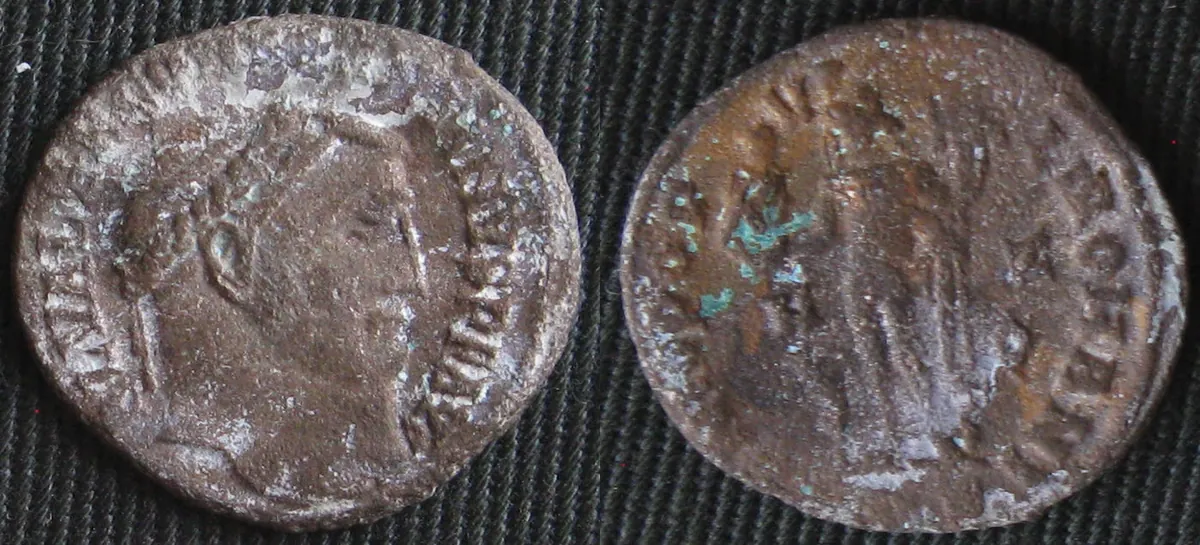
A corrosion layer can be harmful, stable, informative — and often all three at once. It preserves traces of coatings, impressions of organics, technological marks, microrelief. Treating archaeological iron as a solid lump of metal is especially dangerous: under the crust there may be almost no metallic core left.
| Material and condition | What must not be promised | The safe route |
|---|---|---|
| Iron with active, loose corrosion | That any rust should be taken off mechanically or “brought back with current” | Documentation, isolation, assessment of salts and storage conditions; a specialist for significant and complex cases |
| Copper and bronze with green products | That green means one process and one reagent | Work out the nature of the surface, coatings, mixed materials, recurring activity and the history of the piece |
| Silver with a dark layer | That tarnish should be taken down to a shine | First distinguish a stable surface, silvering, niello, soil and decorative elements |
| Lead, tin, zinc, aluminium | That any “metal” protocol applies to them | Treat them as separate materials; when in doubt, specialist advice |
| Bi-metal, plating, gilding | That you can work to the base metal | Any active step can destroy a thin layer and the bond between materials |
Electrolysis, aggressive chemical stripping and fast mechanical opening are not a diagnostic stage. The Society for Historical Archaeology states plainly that active treatments must account for the construction of the object, its materials, its corrosion layers and the long-term consequences. The metal-specific detail lives elsewhere: iron, copper and bronze, silver, electrolysis step by step.
Sodium sesquicarbonate against chlorides on copper alloys is the classic example of a controlled procedure rather than a rinse: it has a duration, solution changes, a stopping criterion and mandatory consolidation afterwards. None of that is the same as soaking something in a bowl.
Glass: leaching and surface breakdown
Glass looks hard and whole, but after a long spell in soil or water its surface is often chemically altered. An iridescent film, cloudiness, “onion layers”, a network of cracks, flaking — none of that is dirt to be removed for looks.
| Sign | Risk of the wrong action | The right first response |
|---|---|---|
| Iridescent, shimmering surface | Stripping the altered layers along with the remains of decoration and the original geometry | Photograph under different light, minimal contact, get advice |
| Cloudiness and matte haze | Rubbing to bring back clarity damages the surface | Do not polish, do not rub; identify the condition first |
| Layered flaking | Thin layers separate, fragments are lost mechanically | Do not take it apart, do not dry it abruptly, do not wash it actively |
| Outwardly intact but very fragile | Failure while simply being held, or while soil is removed | Support the whole object, cut down handling, choose a conservation route |
Glass, enamel, set stones and the other “non-metals” have their own article — special cases — including why chemistry is not applied to them at all.
Organics and composites: why abrupt drying is dangerous
Waterlogged wood, leather, textile, paper, bone and multi-layer objects hold their shape only while water supports the structure. Drying, heat, sunlight, household chemicals and any attempt to “flatten it out” produce shrinkage and irreversible deformation.
| Situation | Why the risk is high | What not to do |
|---|---|---|
| Waterlogged wood, leather, textile | A weakened structure collapses when moisture changes | No hairdryer, no radiator, no sunshine; do not flatten and do not brush |
| Metal with textile or wood remains | The organics are part of the context and are often stuck to corrosion products | Do not separate the materials and do not soak the object “as iron” |
| Paper, a label, a trace of glue or varnish | Water and solvents blur and dissolve surface information | Do not wet it; do not use glue or tape as a temporary repair |
| A composite object | The parts respond to moisture and chemicals incompatibly | Do not apply one protocol just because one material dominates visually |
The water-and-object matrix: when water is not the answer
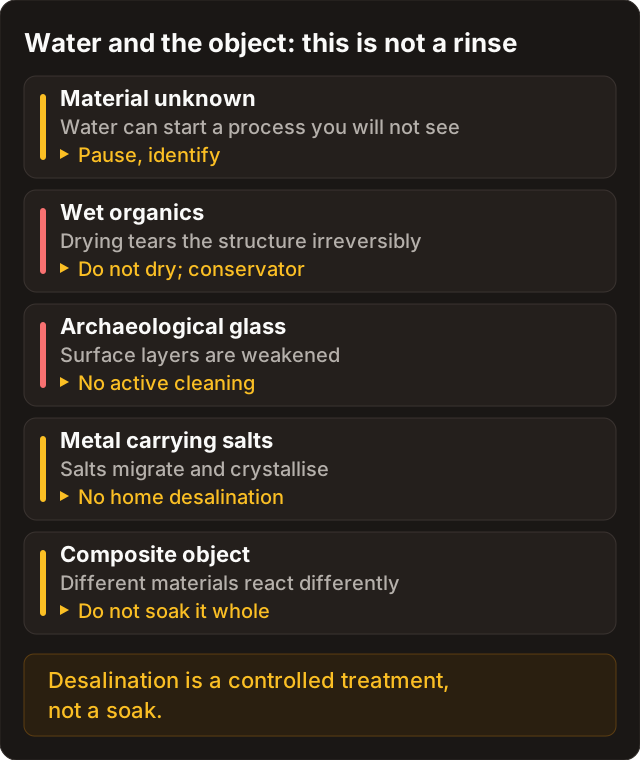
The matrix does not replace diagnosis. It shows when a pause beats hunting for a “gentle” household treatment.
| Situation | Active rinsing or soaking | Safe next step |
|---|---|---|
| The material is unclear | No | Photograph, describe, store separately, identify the material or ask |
| Wet organics or a mixed object | No | Stabilise without abrupt drying and get a professional recommendation |
| Glass with iridescence or flaking | No | Minimise handling, do not rub, get advice |
| Metal with salts, a loose crust or a coating | Not as a standalone decision | Document, isolate, assess the risks and the conservation route |
| Dense, apparently sound ceramics with no coating | Do not decide from appearance | First establish origin, coatings, salts and the limits of this particular object |
| An object with a maker mark, painting, enamel or gilding | No | Photography and specialist assessment |
The line “the material is unclear” covers more cases than it looks. An unidentified alloy, traces of an old restoration, organics hidden under the crust — all of it looks like an ordinary find right up to the moment it goes into water.
Where do-it-yourself ends
Three boundaries worth holding in mind before the tap is turned on.
Legal. Having a find in your hands does not create a right to any intervention you like: the rules of the country where it was lifted cover storage and reporting just as they cover searching. This is an educational overview, not legal advice, and readers searching in Russia or Belarus should treat the regime described for them as a starting point for checking the current local procedure.
Rights are not inferred from how an object looks. If lifting or examination shows signs of a cultural layer, a burial or ordnance, work stops: the object is not cleaned and not moved “for convenience”, and the local notification procedure takes over.
Safety. Any work with solutions means gloves, eye protection, ventilation and dedicated vessels that never go back to the kitchen. Spent solutions contain salts, metals and contaminants; pouring them away like water is wrong. Sesquicarbonate, acids and thiourea each have their own regime and their own risks — see chemistry and tools.
Competence. A significant, archaeological, composite or simply unidentified object is a case for a conservator, not for a bath at home. Choosing not to act is as much a decision as acting, and it goes into the log the same way.
Where to go next:
- The first 24 hours after a find — holding the original condition until diagnosis.
- Restoration principles — reversibility, minimum intervention and the limits of hobby work.
- Iron restoration — salts, corrosion and the consolidation that must follow.
- Copper and bronze — patina, chlorides and sesquicarbonate.
- Preservation and storage — environmental control and preventing a relapse.
- Special cases — glass, organics, coatings and composites.
- Condition monitoring — spotting that the process has restarted.
What to add to the conservation log
Water, salts and chemical processes need a history of observations, not a single before-and-after frame.
| Log field | Example of a useful entry |
|---|---|
| Initial condition | “Loose green zone at the edge; whitish specks visible in the photo; material identified with low confidence” |
| Context and date | “Lifted on 12 May; damp loam at the time of discovery; plot and map sheet recorded” |
| Decision | “No active treatment: there is a coating, organics and an unclear material” |
| Intervention | Only the actual actions, materials, dates and who carried them out |
| Monitoring | “Photo after 30 days; no changes; storage: box with silica gel” |
| Escalation | “Referred to a conservator; glass assessment needed; salt analysis required” |
The log must not turn into an instruction to “repeat the procedure”. Its job is traceability — so that different people do not treat one object in incompatible ways. The same principle underpins the restoration checklist.
FAQ
Is hydrolysis the same thing as corrosion?
No. Corrosion is the chemical and electrochemical alteration of metal. Hydrolytic processes belong to certain organic and polymer materials, where water takes part in breaking bonds. Salt crystallisation and glass deterioration are also water-related, but they are separate mechanisms. The precise term helps you pick a safe action; the loose one leads you into the wrong protocol.
If salts are dangerous, why not simply rinse the object?
Because salts are only one part of the problem. Water interacts with the material, the pores, the cracks, the coatings and any organic inclusions, and what follows has to be a controlled stabilisation and storage regime. Without diagnosis you cannot tell whether the action is helping or creating a new risk that will surface in a month.
Can I judge the presence of salts from the colour of the bloom?
Not reliably. Colour and appearance are a reason for caution, not an identification. Record the observation with a photograph and a description, and do not start an active treatment because it resembles somebody else's photograph.
Is iridescence on glass always a valuable layer?
Not always, but it is a sign you cannot wipe away without assessment. Iridescence is bound up with chemically altered surface layers; losing them is usually irreversible and takes the original surface geometry and any decoration with it.
The bloom came back after an old cleaning. Should I repeat it harder?
No. A second, more aggressive treatment either masks the problem or amplifies it. Record the recurrence, check the storage conditions — humidity, packaging, what sits next to what — and move to a conservation route instead of a second lap of the same procedure.
Is distilled water safer than tap water?
For rinsing, yes: it brings no salts of its own, and controlled procedures use exactly that. But swapping tap for distilled does not turn soaking into desalination — the questions of material, coatings, drying and result monitoring are all still open.