 Google Play
Half the pleasure of the hobby is the moment an unidentifiable green lump turns out to be something specific. The other half of the problems start there too: until an object is identified, it's easy to throw away something good or, worse, polish a rarity into a souvenir.
Below are the classes of find that turn up most often, and the order in which people work through them. Coins have their own crib; clusters are in hoard types.
Crosses and icons
Religious metalwork is the category beginners most underrate, and it is exactly where historically valuable material turns up most often.
| Type and period | Signs | What to watch |
|---|---|---|
| Pre-Mongol, 11th–13th c. | Reliquary crosses, serpent amulets, dense bronze | High value; extreme care with cleaning |
| "Wheel" crosses, 17th–18th c. | Rays or blades at the terminals | Common church metalwork |
| "Petal" forms | Rounded, women's | Don't confuse with buttons |
| Nikita the demon-slayer | A saint and a demon figure | A popular subject for pectoral icons |
One rule covers all of them: don't clean to bare metal. The relief and the patina are what the attribution is made from. If active green appears, see copper and bronze — but not sandpaper.
Horse harness
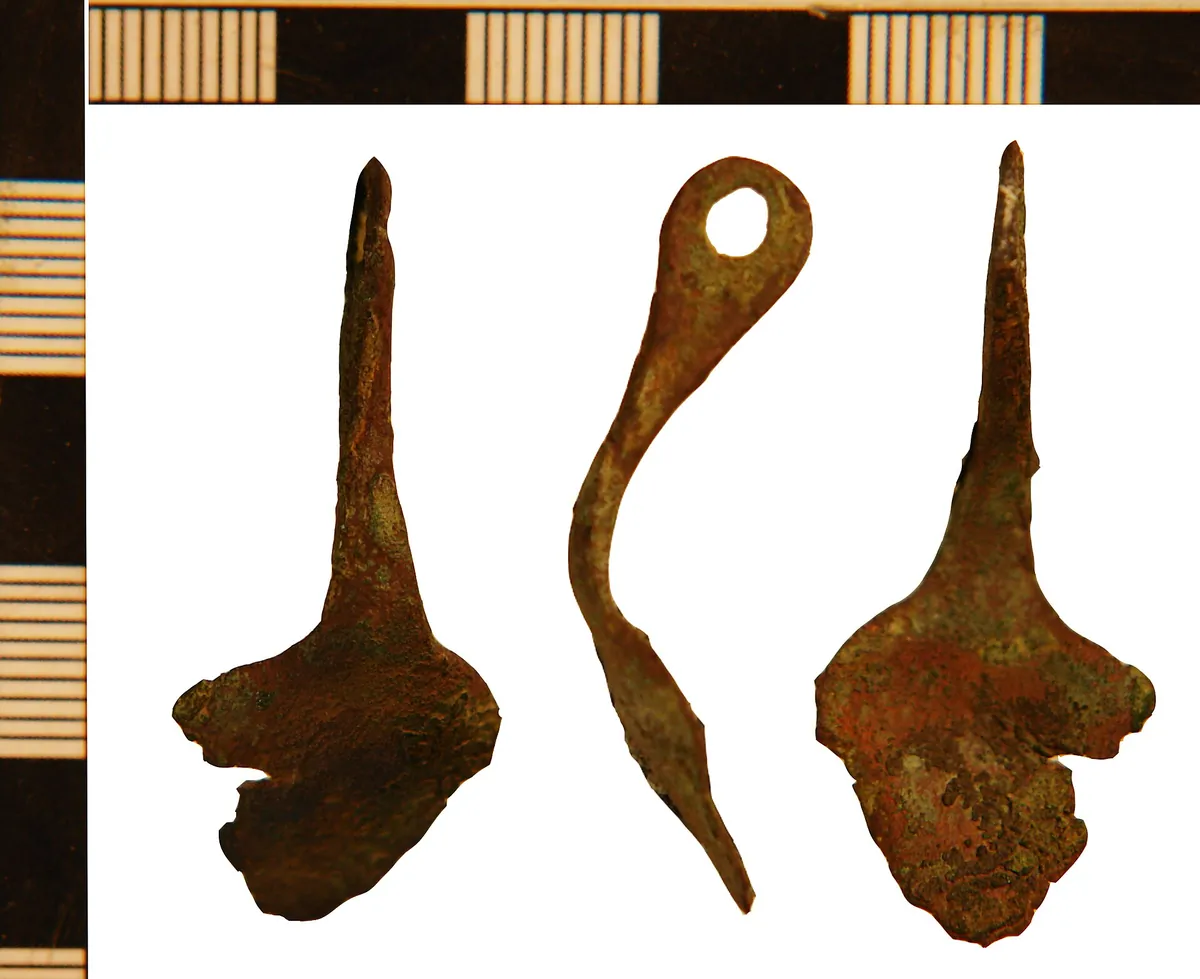
Harness fittings are what beginners discard most often, and almost always wrongly.
- Bells. Intact ones that still ring are worth noticeably more than broken ones.
- Mounts and plates. Sometimes patterned or armorial, which means datable.
- Large rings. These are tack, not the giants' signet rings you hope for the first time.
- Pendants and strap ends. Excellent markers of a road or a yard.
That last point is the important one. Harness is rarely lost in the middle of open ground: it shows where people drove and where they stopped. Pin the spot even when the object itself is unremarkable.
Buttons and buckles
- Weights and drops — early forms, unmistakable once seen.
- Uniform buttons with regimental numbers or emblems can sometimes be narrowed to a specific unit.
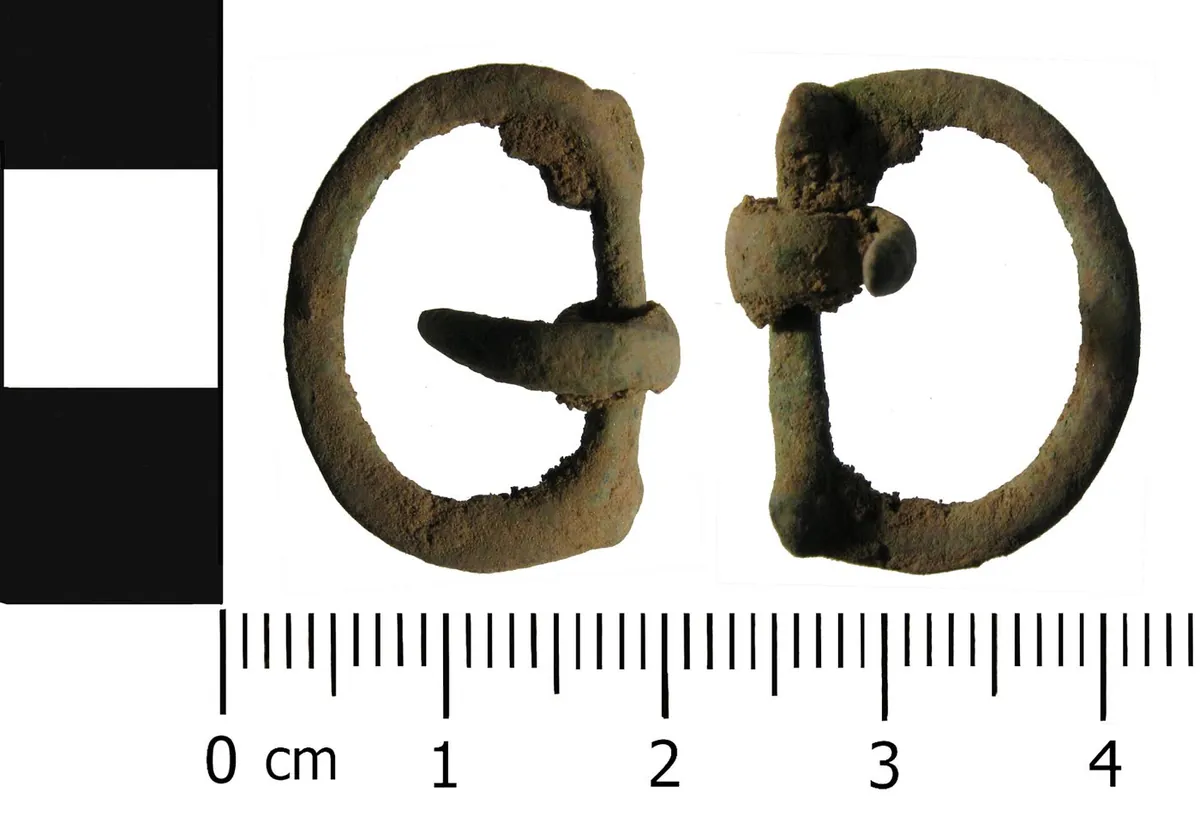
- Buckles — belt, shoe, sword belt. The shape of the frame and tongue says more than how shiny it is.
- Plain utilitarian pieces still go in the diary if there's homestead context around them.
The five-step routine
- Establish material and technique: cast, stamped, wire.
- Photograph the subject, arms or number in close-up, in daylight.
- Put a ruler in the frame. If you have scales, record the weight.
- Don't clean before attribution if the piece might be rare. Otherwise, a gentle start by metal type.
- Pin, map layer and tag. If in doubt, an AI hypothesis — but after the "as found" photo, not instead of it.
What gets mistaken for what
| Looks like | Usually is |
|---|---|
| Gold | Brass or tombac, cleaned up by the soil |
| A giant's ring | A harness ring |
| A hoard | A lost purse or a scatter from a fair |
| An empty signal | A thin button standing on edge |
That last line deserves attention: thin objects on edge sound like nothing at all, and that is how most of the small material gets left behind.
Checklist
- Harness, buttons and buckles with context not discarded.
- Crosses and icons photographed before any chemistry.
- A scale in the frame.
- The spot pinned.
- Any doubt means cleaning stops and the piece gets flagged for comparison.
External references
For comparing find types, and as a model of recording culture, see the Portable Antiquities Scheme. It is an educational resource, not a catalogue of what to dig.
FAQ
Coin or button?
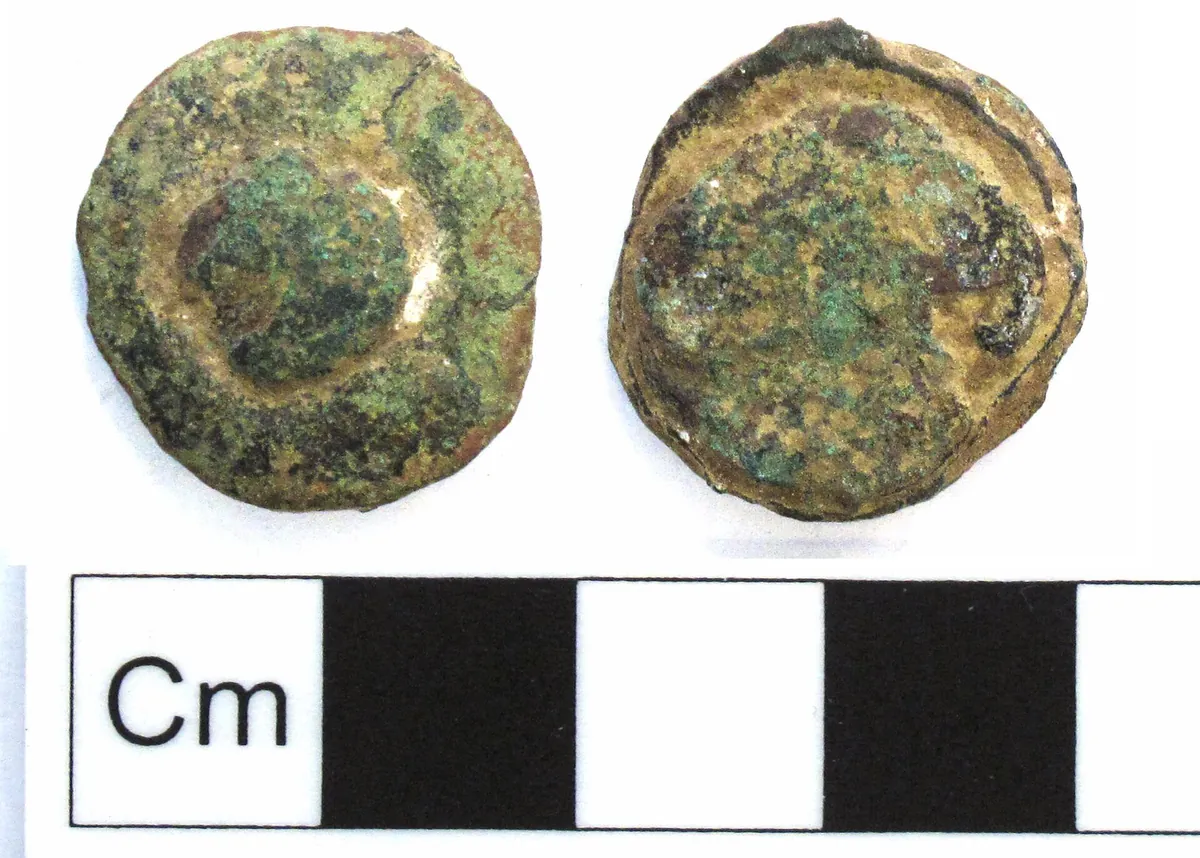
Check the edge, the legend, any holes and traces of attachment. The step-by-step order is in "The five-step routine" above. And either way, photograph before cleaning.
What is harness material and why keep it?
Bells, mounts, rings from horse tack. It shows where the road ran and where the yard was — it carries information about the place, not just about itself.
Crosses and icons — clean them?
Photograph and attempt attribution first. If active green appears, follow the copper guide. Sandpaper plays no part.
Will AI help?
As a hypothesis from a photograph, yes: Discovera AI cases. It doesn't replace a catalogue or a live expert, and pretending it does would be dishonest.
What goes in the diary?
Material, subject or number, scale, the spot, the map layer — and on a separate line, what you did or deliberately didn't do to the object.
Is a loupe worth carrying?
Yes. A loupe plus raking light will often let you read a number or a mark on the spot, with no cleaning at all. The macro photography can wait until you're home.